ServicesWhole-Home Filtration
Whole-Home Filtration in Sun City
We fit a filter on the main line so every tap, shower and washing machine in your home draws cleaner water. If a system is already in place, we start by seeing whether a service will put it right. When new equipment is the better choice, you hear the reasons first.
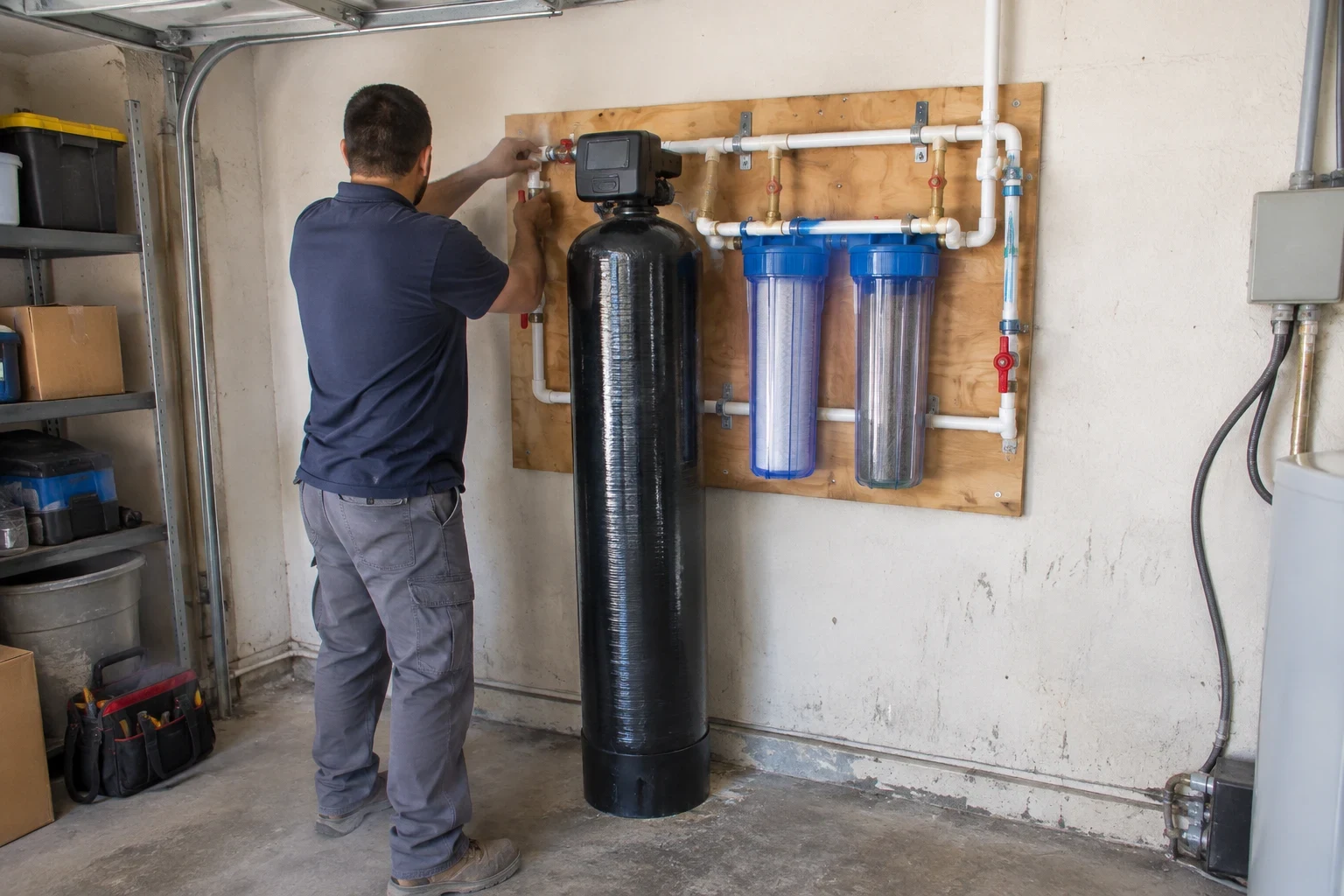
How filtration on the main line works
The filter is installed on the main water line, usually close to where the pipe comes into the garage or along the side of the house. Water moves through a sediment stage first and then a bed of carbon media. Together they cut down chlorine taste and odor, fine grit and some dissolved compounds before anything reaches a fixture. The shower and the kitchen tap are where most people notice the change.
It helps to be clear about the limits. Carbon does not soften water, so it will not stop the white crust that forms on faucets and glass shower doors. Water softener installation handles that, and a filter and softener often sit side by side on the same line. For drinking and cooking water with a finer level of treatment, a reverse osmosis system under the kitchen sink does a separate job.
Plenty of homes around Sun City already have a filter that went in years ago. Often it needs nothing more than fresh media, new O-rings or a bypass valve that turns freely again, and we say so plainly when that is all it takes.
What the work includes
- A look at your current setup
- We check the main line, the shutoff, the pipe material and any filter or softener already in place. That tells us what can stay and what needs attention.
- Service on existing systems
- Where a housing or tank is sound, we change spent cartridges or media, fit new seals and stop drips at the fittings. Good equipment stays in service and the bill stays smaller.
- New system installation
- When replacement is the better call, we size the system to your home's water use and pipe diameter so pressure holds at the farthest bathroom. It goes into the main line with a bypass loop, so the house keeps water during later service.
- Protection for outdoor equipment
- Plastic housings and control heads left in full desert sun grow brittle with time. Where a system sits outside, we position or shade it to slow that wear.
- Flushing, leak checks and cleanup
- New media is flushed until the water runs clear and each joint is checked under pressure. Old cartridges, packaging and pipe offcuts leave with us, and the floor is wiped down as we finish.
Signs your home could use whole-home filtration
Chlorine smell in the shower
A pool-like smell when the hot water runs is one of the most common reasons people call. Carbon media deals with it well.
Sediment in faucet screens
If the small screens inside your faucets and showerhead keep filling with fine grit, the sediment stage is either missing or worn out.
Pressure that has slowly dropped
A clogged cartridge chokes flow long ahead of failing outright. This is usually a simple service, not a new system.
Damp spots around the filter housing
Weeping at the housing or fittings usually points to a tired O-ring or a cracked sump. Caught early, it is a small repair.
No one remembers the last media change
Carbon is used up after a set volume of water. If the system came with the house and the paperwork did not, it is probably overdue.
How a filtration visit runs
- 1
A conversation by phone
You describe what you notice, whether there is existing equipment and roughly where it sits. We give you a clear picture of the likely options before we visit.
- 2
On-site assessment
We inspect the system and the plumbing around it, then explain what we found and whether servicing or replacing makes more sense. You get the reasoning, not just a verdict.
- 3
The work itself
We shut off the water, protect the floor or ground beneath us and carry out the repair or installation. On install days most homes are without water for a few hours at most, and less for routine service.
- 4
Flush, check and walk-through
We flush the system, confirm pressure at the fixtures and show you the bypass and the shutoff. On the way out, we note when the next media change is due.
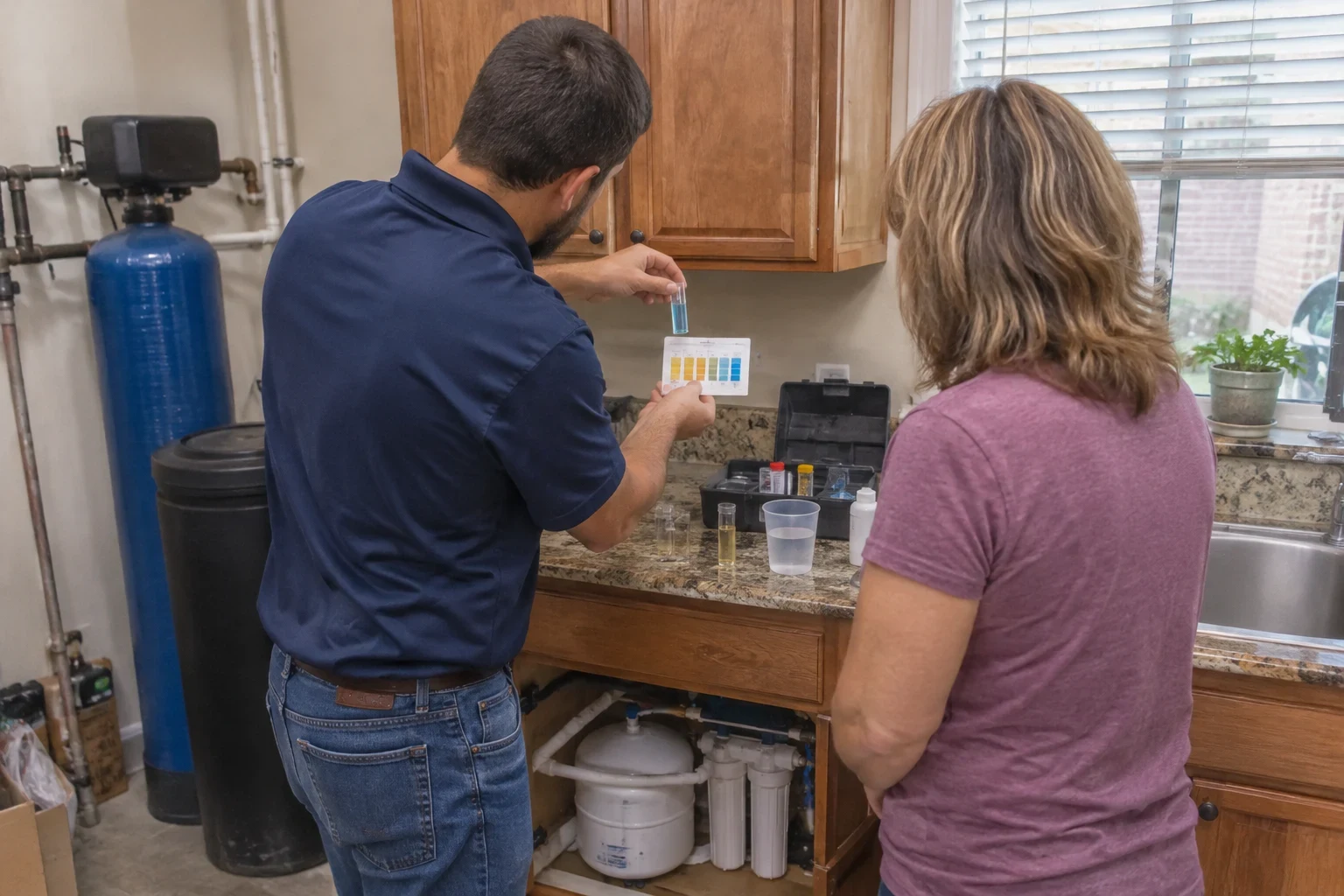
What shapes the cost
Every home is plumbed a little differently, so the price depends on what we find at your main line. Servicing a system you already own usually costs far less than starting over, which is why we look at that first. You get a clear quote before any work begins.
- Service or new equipment
- New cartridges and seals are a modest job. A full tank system with fresh media and a control head is a larger one.
- System type and size
- Cartridge systems and larger media tanks differ in upfront cost and in how often they need attention. Homes with more bathrooms need more capacity to hold pressure.
- Pipe material and access
- Copper, PEX and older galvanized lines each take different fittings. Tight garages or equipment boxed in behind storage add time.
- Extra plumbing changes
- Adding a bypass loop, moving equipment out of the sun or tying in next to a softener can add parts and labor.
Questions about whole-home filtration
Something not covered here? (623) 244-7175
Will a whole-home filter soften my water?
No. Carbon media takes out chlorine taste, odor and fine grit, but calcium and magnesium pass straight through it. Those minerals are what leave hard white deposits on fixtures and glass, and water softener installation is the service that deals with them. Many homes run both, with the filter placed ahead of the softener.
Can you service a system someone else installed?
Usually, yes. Most housings and media tanks use standard parts. We check the condition of the equipment first, and if it is sound we service it and keep it working.
How often does the media need changing?
That varies with the type of system and how much water passes through it each day. Sediment cartridges tend to need swapping a few times a year, while a carbon tank lasts considerably longer. We leave you a schedule matched to your system.
Will filtering the whole house lower my water pressure?
A properly sized system should not cause a noticeable drop. Pressure loss usually comes from a clogged cartridge or a unit too small for the home, and we look for both during the visit.
Do I still need reverse osmosis if I have a whole-home filter?
Not necessarily. A whole-home filter improves the taste and smell of water throughout the house. A reverse osmosis system adds a finer stage of treatment for drinking and cooking water at one sink, and some people like having both.
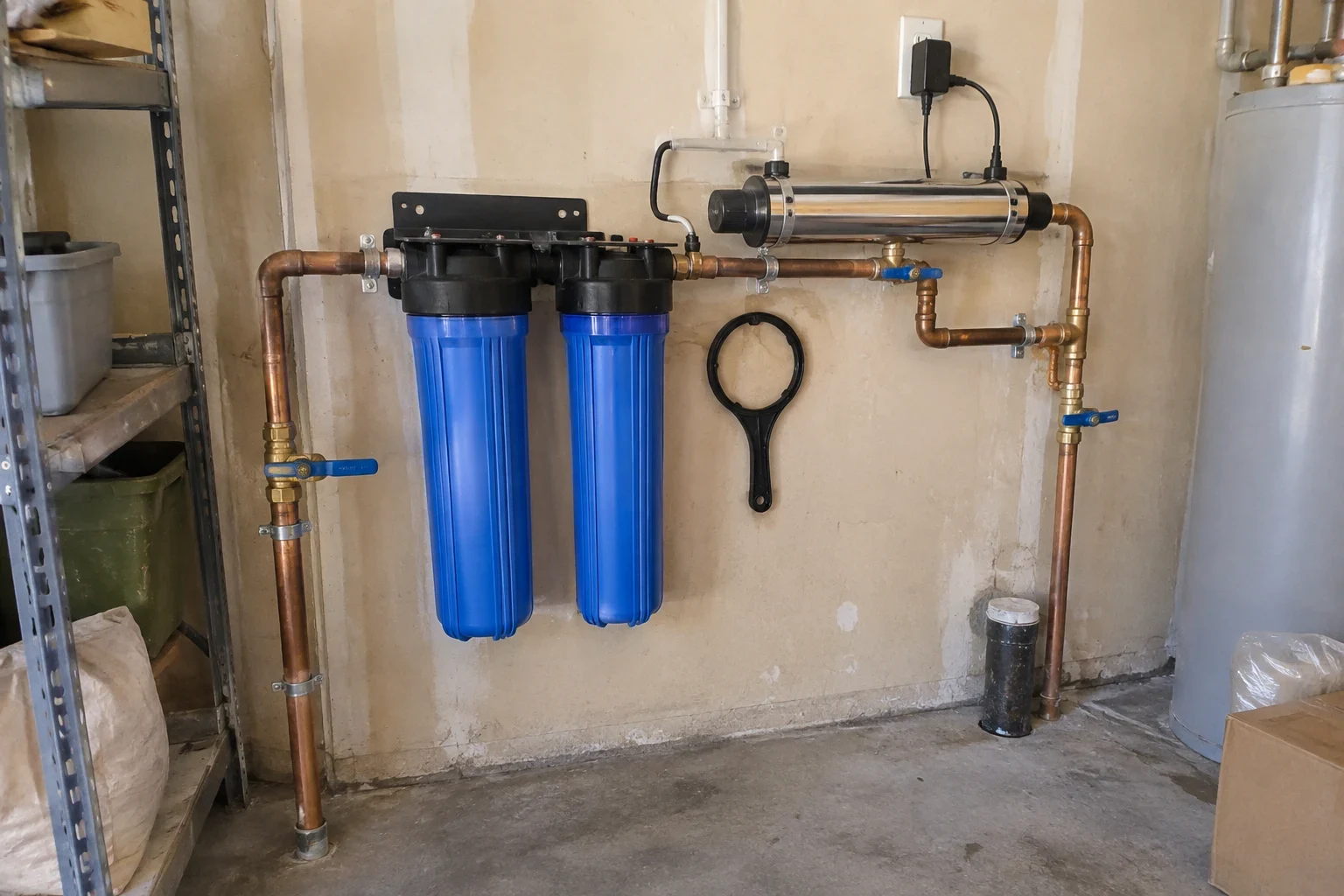
Find out if your filter just needs a service
Describe what you see at the tap and the equipment sitting in your garage now. We will tell you plainly whether a service will do, and quote the work before we start.