ServicesWater Softener Installation
Water Softener Installation in Sun City
We install water softeners that are sized to how your home actually uses water, plumbed cleanly with a proper bypass and drain. If you already have a softener, we look at it first and tell you plainly whether a repair will carry it.
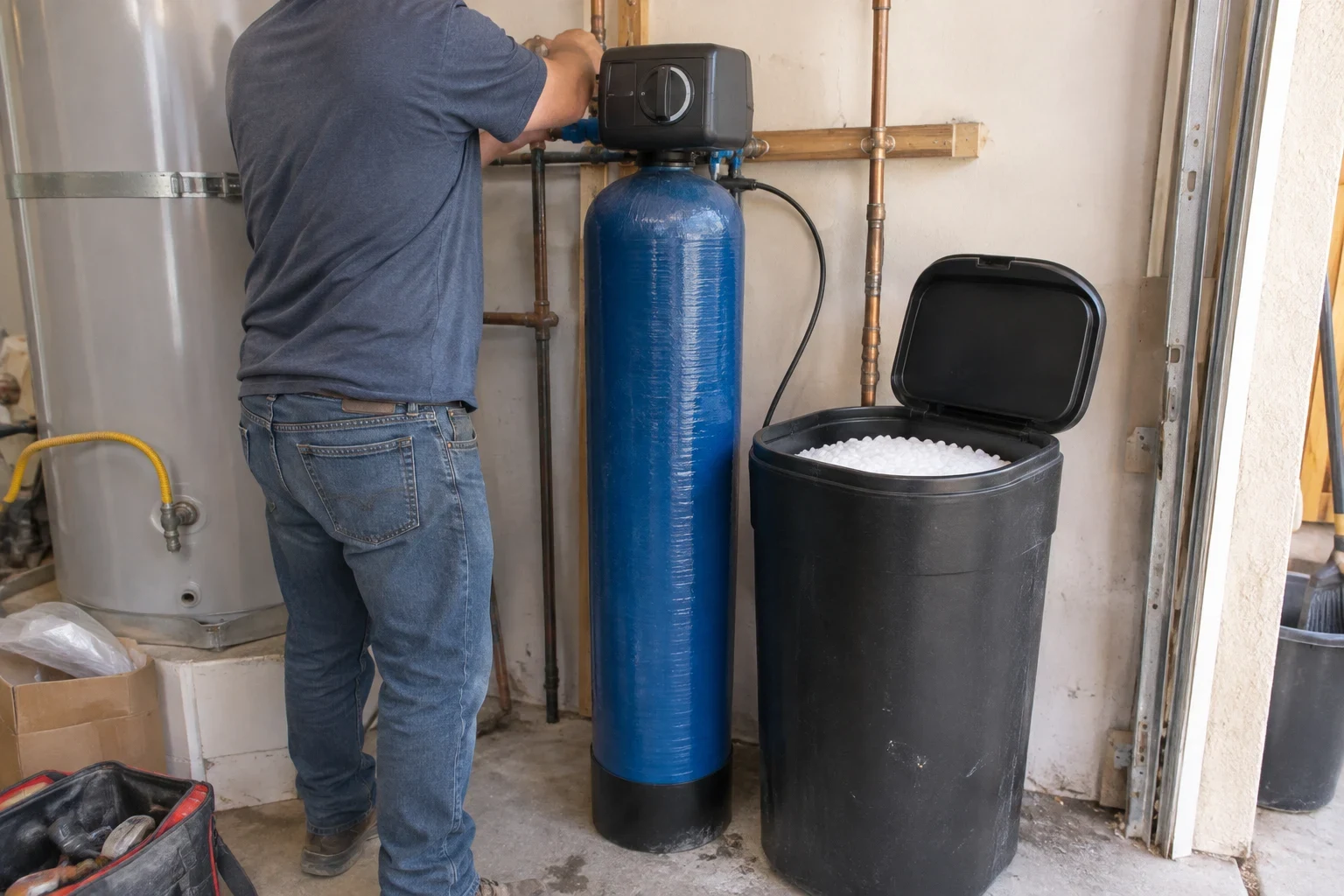
A new softener, or a working one
Hard water leaves chalky spots on glass, crust on faucet aerators and scale inside your water heater. A softener removes the calcium and magnesium before they reach your fixtures. Done well, it is a quiet piece of equipment you rarely think about.
Many calls we take start with an older unit that has stopped regenerating or is pulling no salt. Often the fix is a control valve part, a stuck injector or a clogged brine line, and a new system is not needed. When the resin is worn out, the tank is cracked or the valve is no longer supported, we explain why replacement makes more sense and what it involves.
When a new softener is the right call, we choose a capacity that matches your household and your water, then install it with care for the finish of the work: straight runs, secured lines and a tidy space when we leave.
What the installation includes
- Sizing to your household
- We size the unit from the number of people at home, your daily water use and the hardness figure from your water provider's published report. An oversized tank wastes salt; an undersized one regenerates too often and wears the valve.
- Bypass valve and shutoffs
- We fit a bypass valve on each installation. Turning it routes water around the softener while the rest of the house keeps running, which makes later service quick and tidy.
- A properly gapped drain
- We run the regeneration discharge to an approved drain point and leave open space between the line and the drain. That gap keeps anything in the drain from being pulled back toward the water you drink.
- Brine tank setup
- We place the brine tank where you can reach it to add salt, level it, connect the brine line and fill it. If you would rather not carry bags, ask about our automated salt delivery.
- Programming and first regeneration
- We set the hardness, capacity and regeneration time, then run a full cycle while we are still there to confirm the valve, drain and brine draw all work.
- Removal of the old unit
- If we replace an existing softener, we disconnect it, cap what needs capping and take it away.
Signs it is time to look at your softener
Spots and scale are back
White film on shower glass or crust on fixtures after a stretch of soft water usually means the softener has stopped doing its job. It may be a setting, a valve part or spent resin.
The salt never goes down
Salt that sits untouched for a month tells us the unit is not pulling brine. A hardened salt bridge or a blocked injector is the usual cause, and both tend to be simple fixes.
Water in the brine tank keeps rising
An overfilled brine tank points to a float or valve problem. Caught early, it is a small job.
Constant running or drain noise
A softener that cycles at odd hours or drains continuously is wasting water and salt, and often has a worn seal or piston.
No softener yet, and hard water symptoms
Stiff laundry, soap that will not lather and short-lived water heaters are typical signs of hard water. In much of the West Valley, these are what lead people to consider a first softener.
How an installation day runs
- 1
Start with a phone call
Describe the symptoms and the equipment already in place. We ask where the main line comes into the house and whether a softener loop exists, so the right fittings are on the truck when we arrive.
- 2
A look at what you have
If there is a softener already, we inspect the valve, resin and brine system before talking about anything new. You get a straight answer on repair versus replacement.
- 3
Protecting the space
Most softeners here sit in the garage near the water heater. We lay down covers, shut off the water and drain the line before cutting in.
- 4
Plumbing and setup
We install the bypass, connect the softener, route the drain with its gap and set up the brine tank. Lines are secured and supported, not left hanging.
- 5
Testing and cleanup
We restore water, check every joint for leaks, run a regeneration and walk you through the settings and salt. Then we sweep up and haul away packaging and any old equipment.
What affects the cost
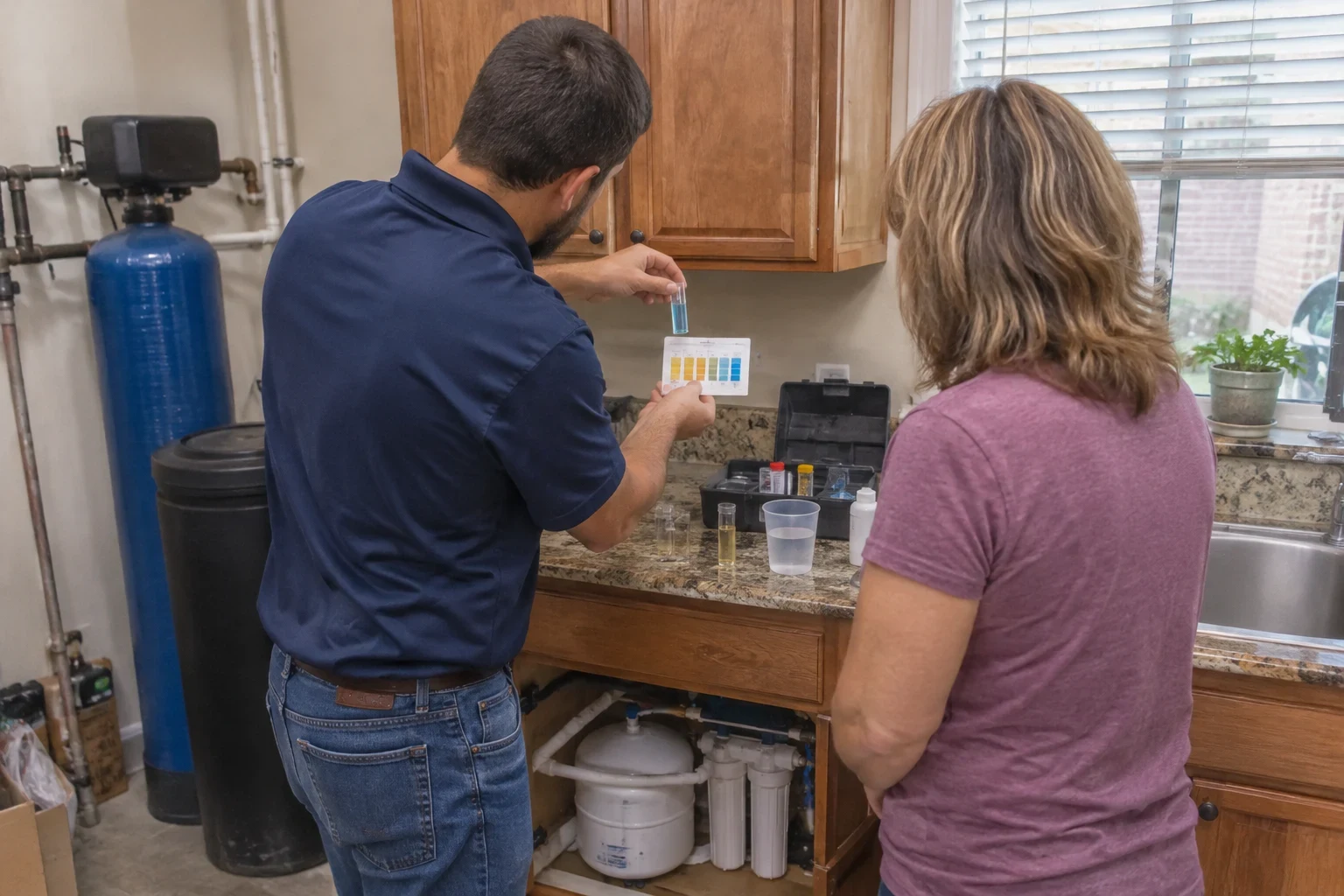
After we hear how water enters your home and what equipment is already there, we give you a price over the phone and walk through each line of it with you. When a repair will keep your current softener going, the repair is what we price. For a new installation, a handful of practical things set the number.
- Size of the unit
- Larger households and harder water call for more resin capacity, which means a bigger tank and a higher equipment cost.
- Existing loop or new plumbing
- Homes with a softener loop already in place are simpler. Without one, we tie the softener into the main line ourselves and add the piping it needs, so labor and materials go up.
- Pipe material and condition
- Copper, PEX and older galvanized lines each connect differently. Corroded or undersized pipe near the connection point may need replacing before the softener goes in.
- Drain and power access
- A nearby drain and outlet keep things straightforward. Longer drain runs or a new outlet location add to the work.
- Removing the old system
- Disconnecting and hauling away an existing softener and brine tank is part of the quote when a replacement is needed.
Water softener installation questions
Something not covered here? (623) 244-7175
Is my old softener worth fixing, or should I start over?
In many cases the old unit is worth keeping. Valve seals, pistons, injectors, floats and brine lines can all be swapped, and we check those parts before anything else. If the resin is exhausted, the tank is damaged or parts are no longer made, we say so and explain why a new unit is the better use of your money.
How long does an installation take?
Where a loop already exists, most installs take a few hours. Homes that need new piping to the main line take longer. You will be without water only for the part of the job where the line is open, and we tell you before we shut it off.
How do you decide what size softener I need?
We look at how many people live in your home, your typical water use and the hardness listed in your water provider's published report. From those we choose a capacity that regenerates at a sensible interval, which saves salt and reduces wear on the valve.
Will soft water feel different?
Yes. Soap lathers more easily and water can feel smoother on your skin. That slick feeling is the absence of minerals, not leftover soap.
Does a softener work alongside other treatment?
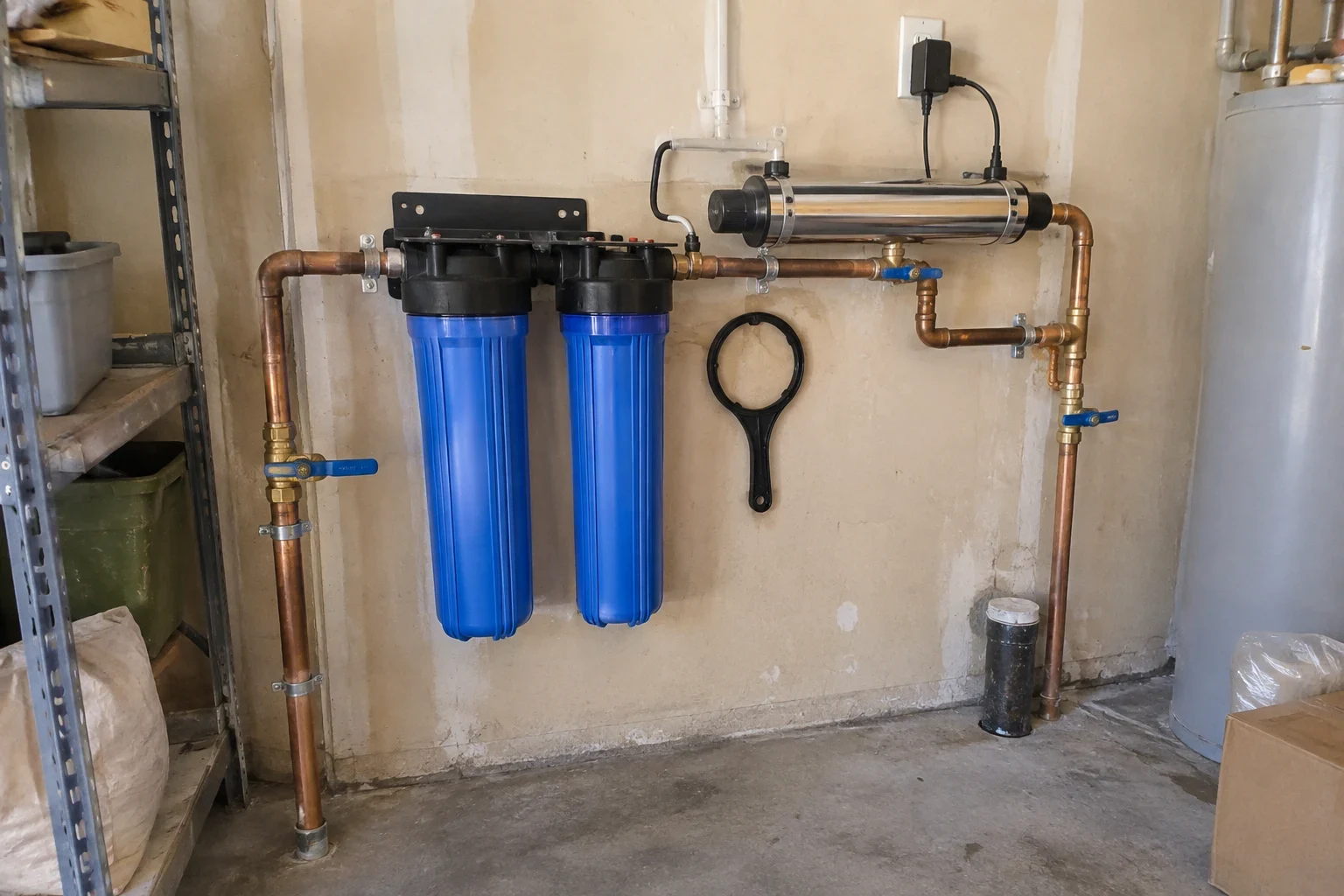
It does. Many homes pair a softener with whole-home filtration for taste and odor, or a reverse osmosis system at the kitchen sink for drinking water. Softening first also helps an RO membrane last longer.
Get a straight answer on your softener
Let us know what the water is doing and what equipment sits in your garage today. We will say whether the old unit is worth keeping or a new softener is the smarter step, and walk through the quote on the call.